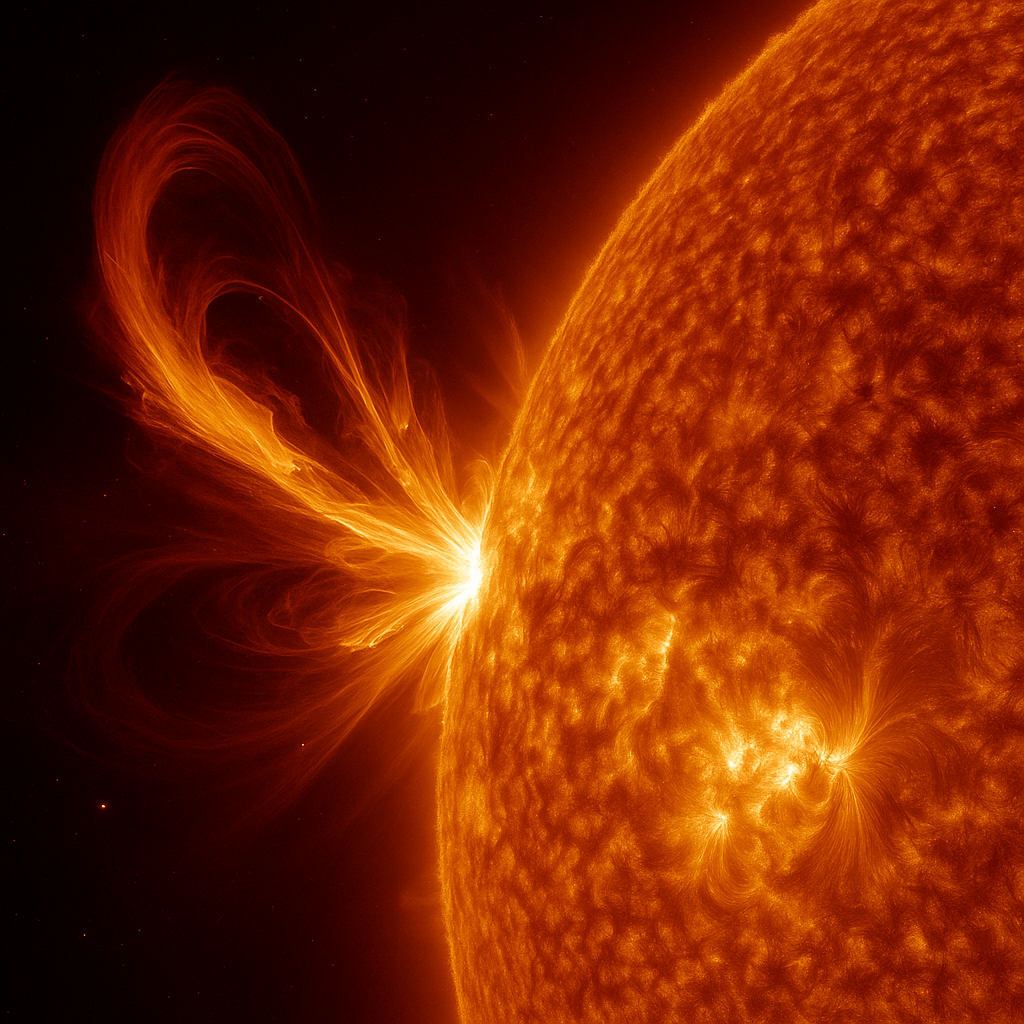
Solar Flares and Rising Temperatures — What You Should Know

In recent months, scientists have observed intensified solar activity—particularly a rise in solar flares and coronal mass ejections (CMEs). These phenomena, often associated with the Sun’s 11-year solar cycle, have raised public curiosity and concern, especially as extreme heatwaves affect regions across Asia, Europe, and North America.
What Is a Solar Flare?
A solar flare is a sudden and powerful burst of electromagnetic energy from the Sun’s surface, typically originating near active sunspots. These flares often coincide with CMEs, where massive amounts of charged solar particles are hurled into space at high speeds.
Do Solar Flares Cause Heatwaves?
Despite their intensity, solar flares do not directly heat the Earth’s surface. Their primary effects include:
- Disruption of satellite and radio communications
- Temporary disturbances in Earth’s magnetic field
- Increased auroral (northern lights) activity
While these can affect the ionosphere and magnetosphere, there is currently no scientific evidence linking solar flares to ground-level heatwaves.
Why 2025 Is Important
Solar Cycle 25 is predicted to peak between late 2024 and early 2025, leading to more frequent and intense solar activity. NASA and NOAA have reported an increase in X-class solar flares—the most powerful category—raising alerts for geomagnetic storms.
Solar Flares vs. Climate Change
It is important not to confuse space weather with climate change. While solar flares cause short-term disruptions in the upper atmosphere, the rising global temperatures are largely driven by:
- Greenhouse gas emissions
- Deforestation
- Urban heat island effects
The heatwaves seen across many continents in 2024–2025 are linked more to long-term climate shifts than solar flare activity.
What You Can Do
While solar activity will continue to rise through 2025, there is no immediate threat to human health from solar flares themselves. However, it’s wise to stay informed via reliable sources:
Conclusion
Solar flares are powerful and awe-inspiring, but they are not responsible for the extreme temperatures we’re experiencing globally. The true causes of current heatwaves lie in climate change and human activity. As we approach the solar maximum of 2025, space weather will remain a fascinating area of study—but not a primary factor in global warming.
Tags: Solar Flares, Solar Cycle 25, Global Heatwave, Climate Science, Space Weather, NASA, NOAA
 iBlogg
Leave a comment